My Road to Salzkammergut
16th overall — 10h 07min — 202 km — 7,000 m of elevation
Salzkammergut is one of the toughest mountain bike races in Europe, and after finishing it, I can honestly say that the elevation profile doesn’t really tell the whole story. Austria has a particular image for all of us who love the mountains, and this race was something both beautiful and testing.
I had a small plan going into the race, but since this was my first time racing for around ten hours, I knew most of what I needed to learn would happen out on the course. The elevation profile makes it look like the biggest challenge comes at the beginning and the end; but in reality, the climbs in the middle are the ones that slowly destroy you. They don’t necessarily look impressive on the graph, but after hours of riding they become brutal. They slowly eat into you and your reserves of energy and willpower. The race is a battle in so many ways.
Planning and preparation
My only real preparation specifically for the race was getting used to waking up much earlier than usual during the two weeks before it. The start was at 5:00 AM, which meant breakfast at 3:00. I arrived in the area on Wednesday and, much to my coach’s frustration, rode a little more than planned because I wanted to recon as much of the course as possible. That turned out to be extremely useful, especially towards the end. I rode the final two long climbs, the last descent and several of the flatter sections between the villages, so I knew what was waiting for me when things got difficult.
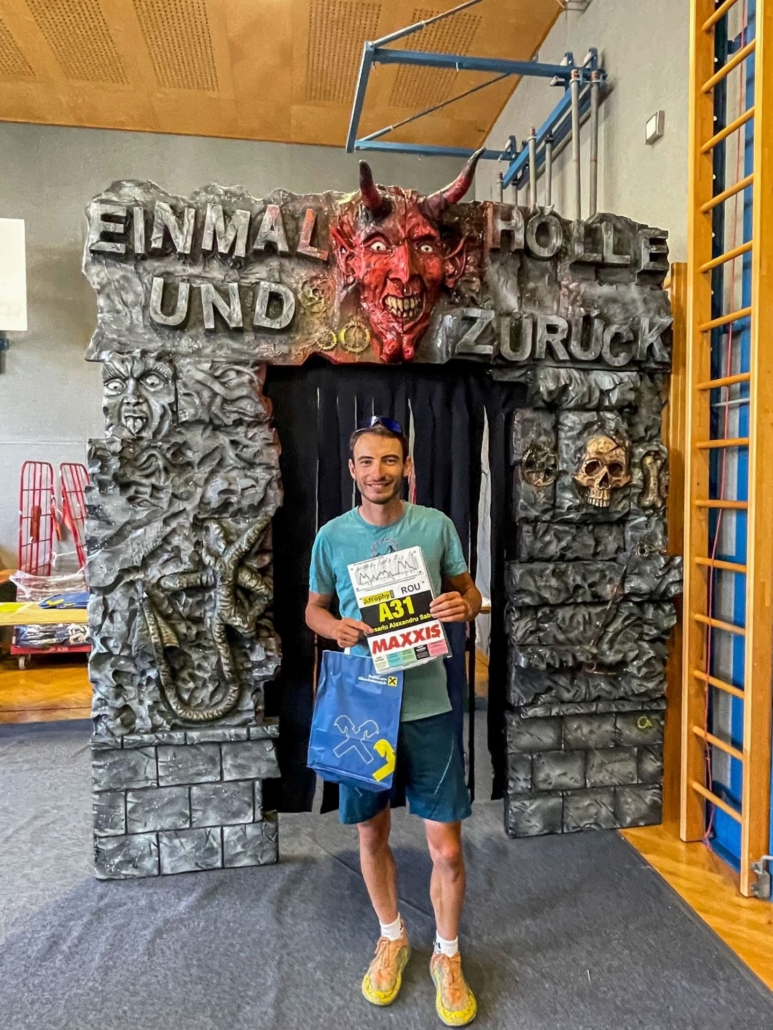
The day before the race, the organisers also required an official bike inspection – something new for me. After racing, I understood why they take it so seriously: they check things like brake pad wear, possible cracks and other details that become important when you are asking a bike to survive 200 kilometres and 7,000 metres of climbing. In truth, these things are aspects that we all need to pay more attention to when riding into the mountains.
I managed a short nap during the afternoon and then slept around four hours before the race. For an event like this, the important rest happens in the days before because you probably won’t get much sleep on race night anyway.
Early starts for epic events
Anyway, at 3:00 AM, bright and early, I was awake and eating my special oats. And by the ungodly hour of 4:10 AM, I was already in the start area, with around 500 riders lining up for the main event. No sensible person would be awake and riding – but that’s what makes mountain bike marathon so special.
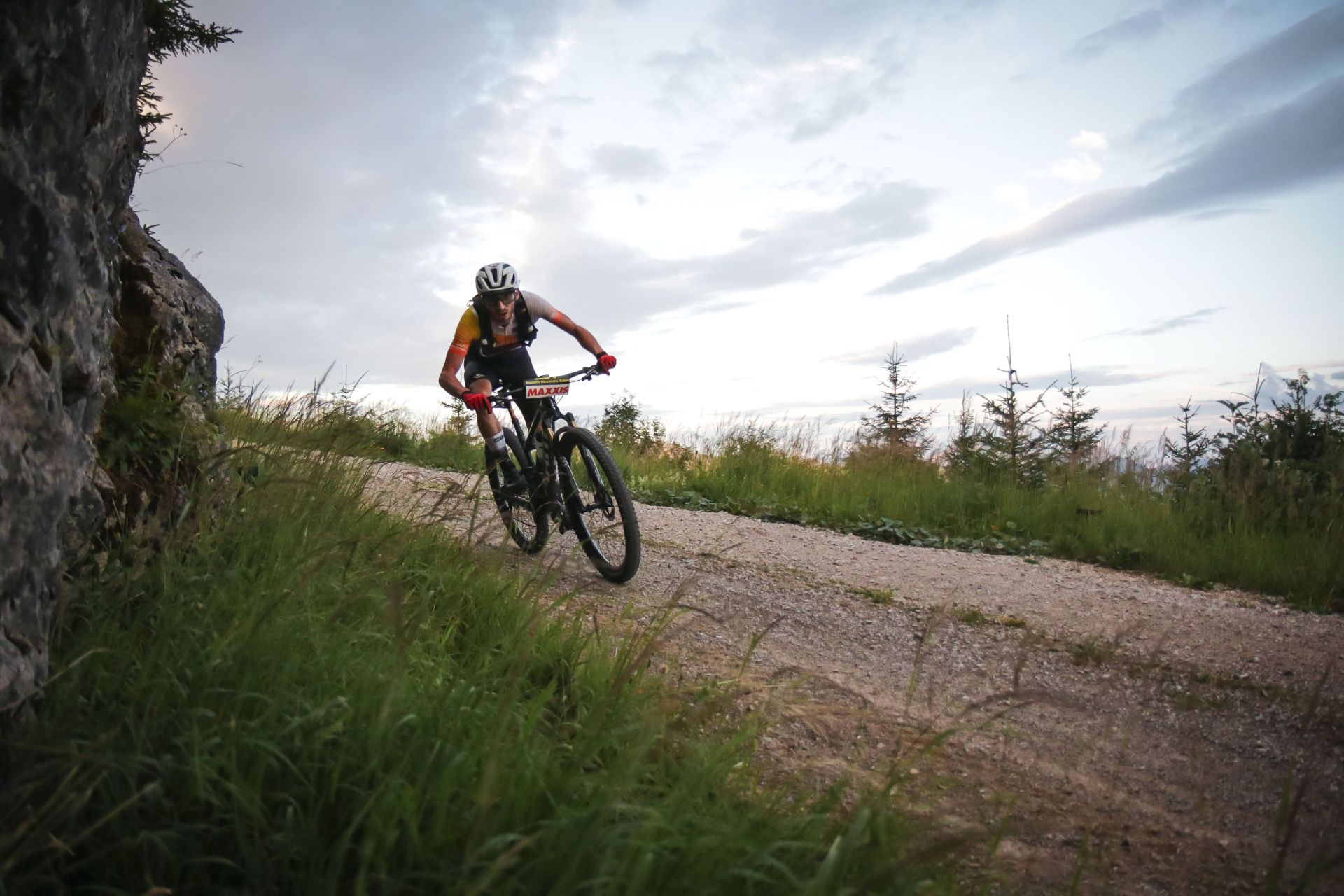
The weather forecast looked good, even though it had been raining continuously until about 30 minutes before the start. When the torches came on, we were off. My plan was to stay as controlled as possible. The first climb immediately started splitting the field, and you could already see some riders making the classic mistake of going too hard too early. It reminded me about focus and the need to stick to my plan, and I joined two guys and started ticking off the kilometres at a steady pace, following one of them on the descents because he clearly knew the lines better than I did.
A huge part of the course runs on incredibly smooth forest roads, which sounds easy but is actually quite dangerous from a pacing perspective. They make you want to ride very fast and can tire you out much more than you expect. It’s these elements that you really need to be disciplined when riding. Then, when the course suddenly changes and throws you onto a technical trail, you have to change your rhythm and concentration instantly.
Early injuries to test my willpower
That is exactly what happened to me around kilometre 40. After about 30 minutes of flying down forest roads, I entered a technical, rocky section, my front wheel locked up and I went over the bars, landing face-first into the rocks and my handlebars. I saw a white flash, then a lot of blood on my clothes and legs. The left brake lever moved inwards, and that’s how I rode for the rest of the race.
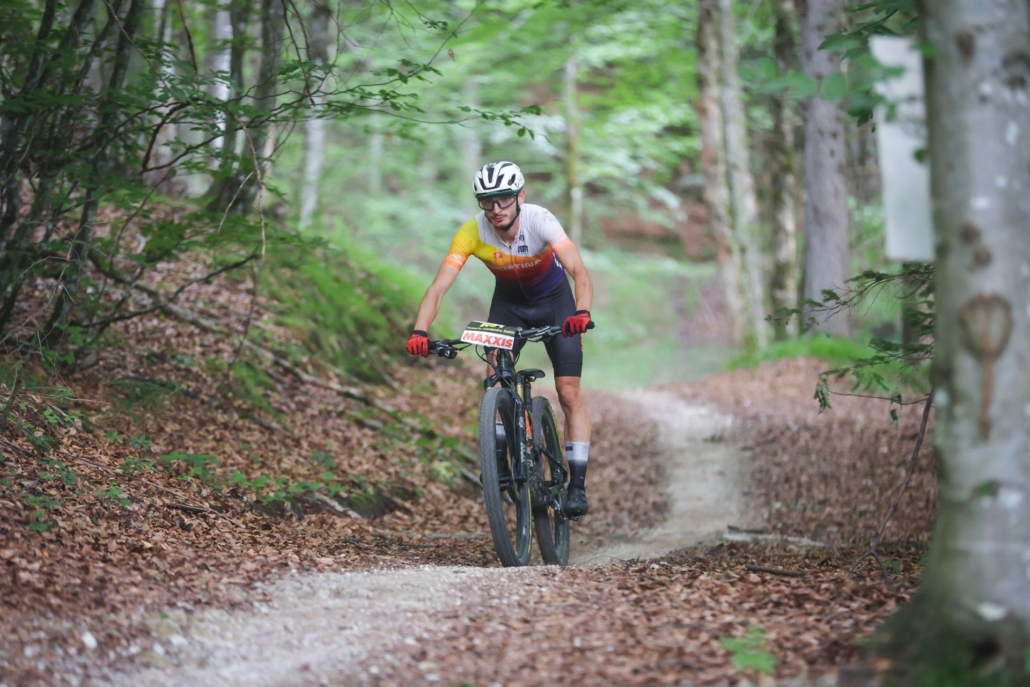
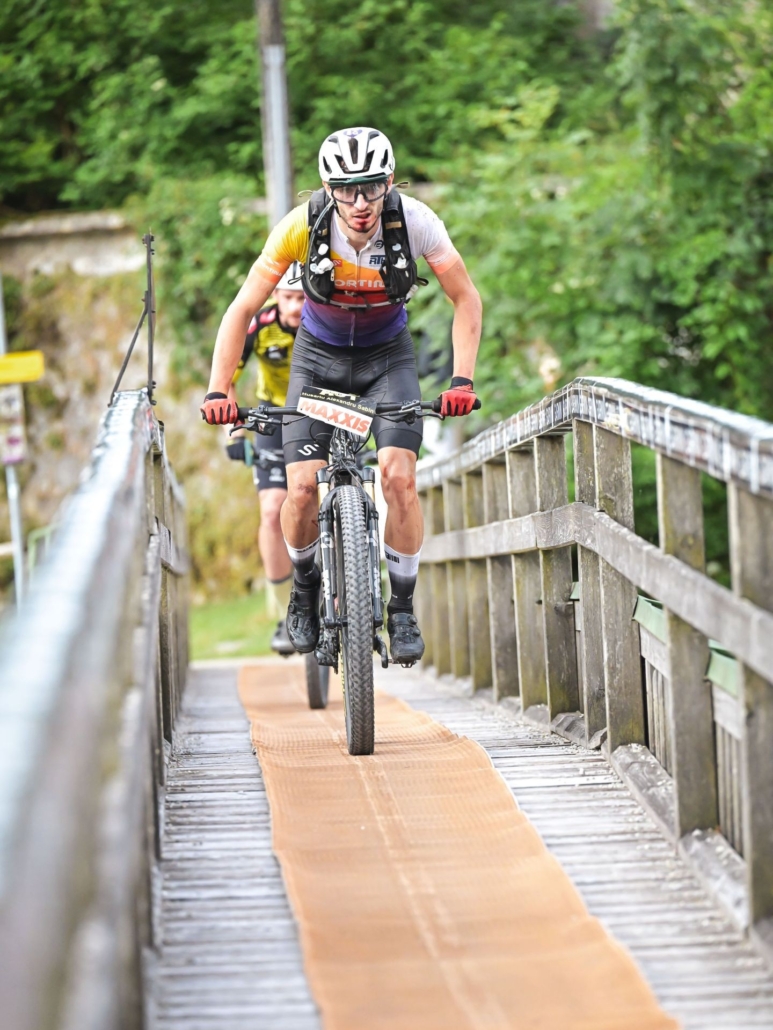
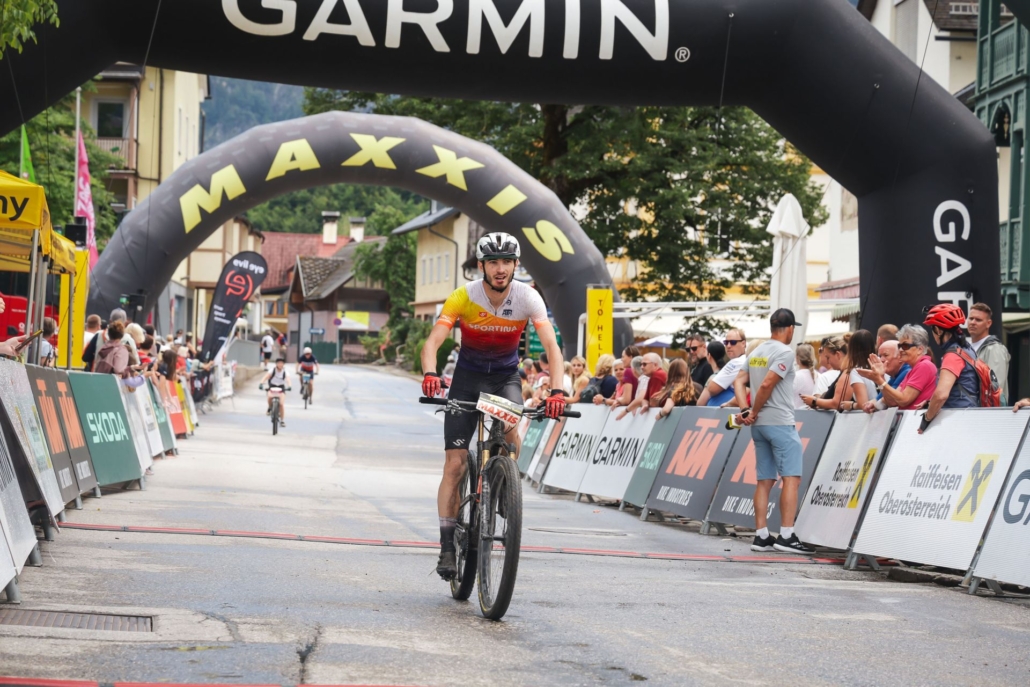
When I reached the first support point where Teodora was waiting, she didn’t tell me just how bad my face looked. I left the small backpack I had started with and continued. I didn’t feel any major problems, although every time I ate or drank my face burned badly and the bleeding would start again from time to time. I think half of the official race photos have me riding around with blood all over my mouth. And yes, the crash definitely affected me on the next few descents; but as long as I could pedal, I decided that everything was fine. Living and working in the mountains, I know that we have to be tough at times – and this was one such time.
By kilometre 95, everything was still more or less on schedule. We were around halfway through both the distance and the elevation, and I picked up my small backpack again for the next 40 kilometres. This was also where the longer course merged with some of the shorter races, creating a bit of chaos and causing me to lose the group I had been riding with. The next 20 kilometres alone were much harder than they looked on the profile. Actually, that became one of the main lessons of the race: many sections were considerably harder in reality than they looked on the graph.
Group riding for aided motivation
Then came around 30 kilometres of flatter riding, where I joined a group from one of the shorter races. It wasn’t exactly the pace I wanted, but riding with a group was better than doing it alone. I reached kilometre 140 with an average speed of around 20 km/h and started getting a little disappointed. The hardest climbs were still ahead, and I was convinced my pace would only get worse. Nutrition had worked almost perfectly for the first seven hours: around 120 grams of carbohydrates per hour. Then, little by little, I couldn’t take that much anymore, so I dropped to around 80 grams per hour, and during the final hour and a half I managed only one gel. Before the penultimate climb, I finally got rid of the backpack and mentally prepared myself for the suffering.
I knew this climb because I had ridden it three days earlier. It was brutal, with steep sections coming after many hours already spent on the bike, and my knees were beginning to give up. Somehow, though, I managed to maintain a surprisingly decent pace. I descended into the opposite valley and found Teodora waiting with a very welcome Coke. I had been racing for eight and a half hours and was around kilometre 160, so I told her I wasn’t going to make my ten-hour target. There were still 40 kilometres and another 1,000 metres of elevation to go.
And then something strange happened…
Almost inexplicably, I rode the final big climb at the highest pace of the entire race. Pushing around 320 watts after nine hours was an incredible experience and probably one of the best fights with myself, I’ve ever had on a bike. It was a truly unique and strange moment – but welcomed by me.
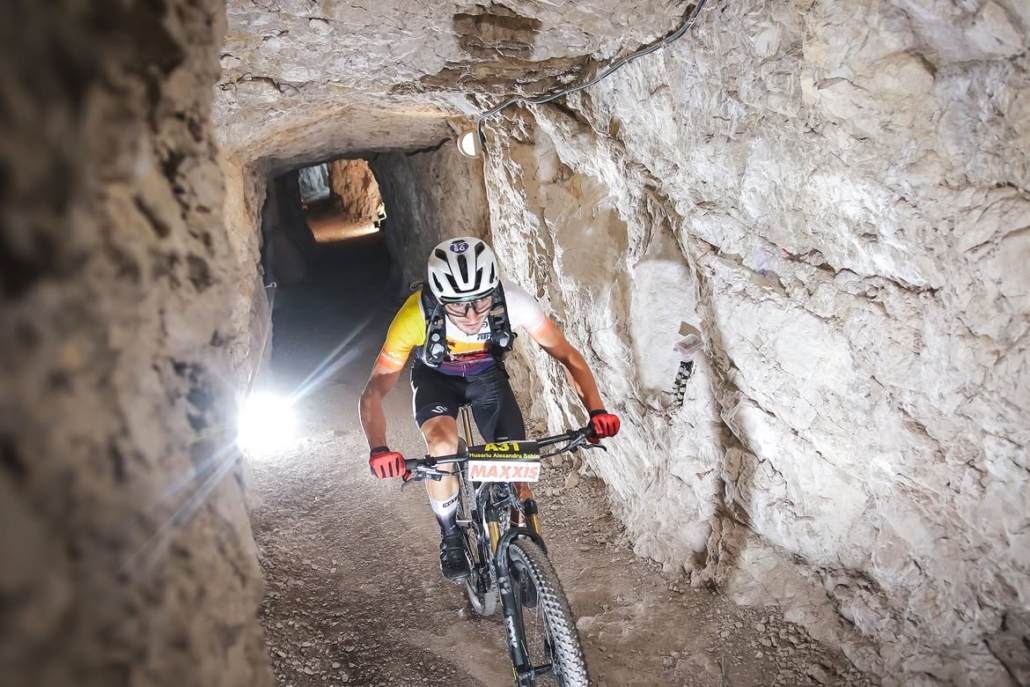
The final descent brought another surprise: the sky opened up. Cold rain, hail, almost zero visibility, and we were still flying down a forest road. I started counting the kilometres, just wanting to get back into the valley where I could see the sun again. The final ten kilometres became a time trial when I realised I might still be able to make my original target. I didn’t know the finish very well and thought the last five kilometres would be mostly asphalt, but instead the course sent us back onto trails around the finish area. That cost me a few minutes, and I eventually crossed the line seven minutes outside my original ten-hour target.
I didn’t get much time to celebrate because I had to go to hospital for some checks. Thankfully, nothing serious — just three nasty cuts on the inside of my lip that needed stitches. So instead of the burger and fries I had been dreaming about, I got a week of soup.
Was ten hours ever realistic?
Honestly, I had set the target without thinking about it too much. I wanted to raise the bar, but I wasn’t convinced I could actually do it, especially since I had never experienced how my body would react to such a long effort. And, in the end, I finished 16th overall. At one point I was even riding in the group fighting for the top ten, but for that level I still have a bit more bread to eat. The race itself is absolutely brutal. At some point I started thinking the organisers must have been laughing at us.
“You want to pedal? Fine. Here you go.”
When they designed the course, I imagine the conversation was something like: “Where should we take them?” — “Everywhere.”
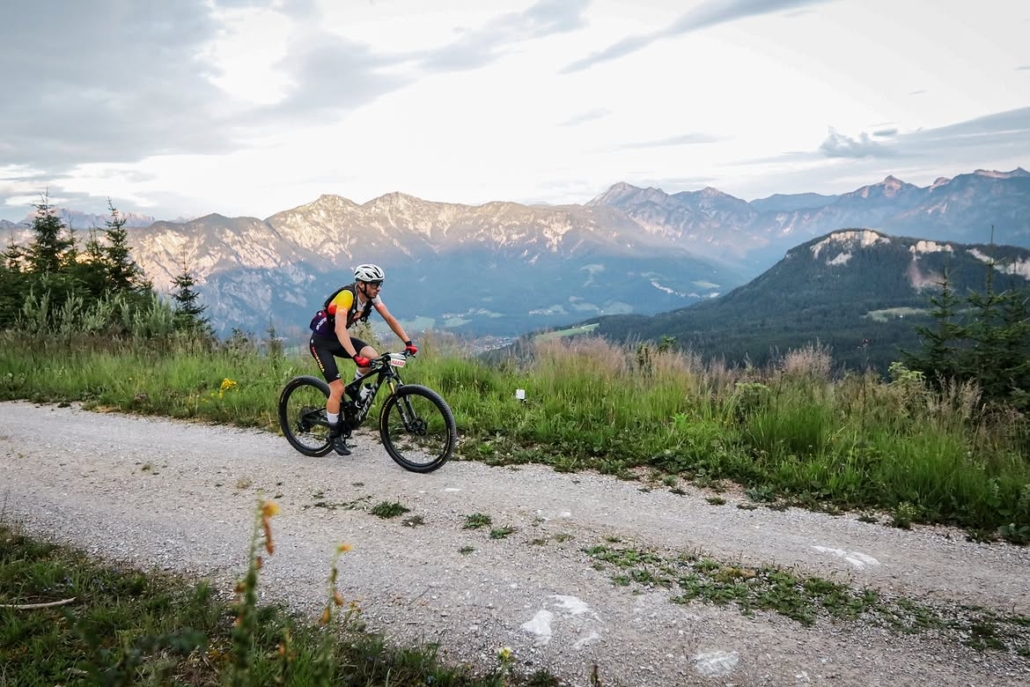
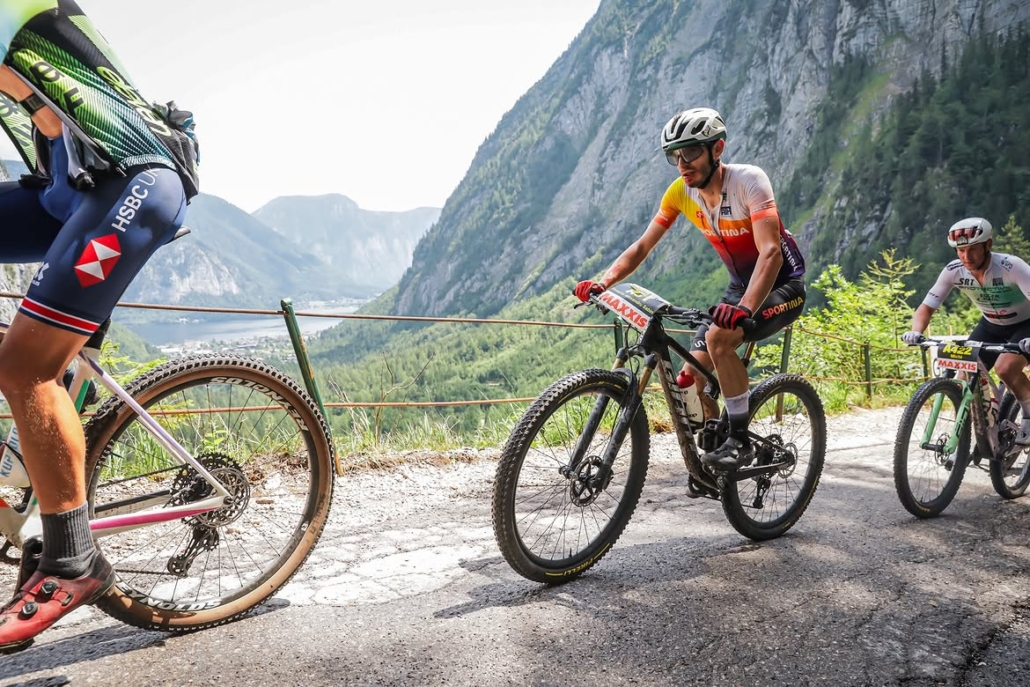
And they really did. Forest roads, village roads, technical trails, buildings, lakes — at some point I genuinely felt like I had been riding for at least two days.
Racing with support
I also think it is extremely difficult to achieve a really fast time here without support. Pretty much everyone in the top 30 had someone helping them, with bottles and gels waiting at different points. Even though the race has aid stations roughly every ten kilometres, having someone hand you exactly what you need is incredibly valuable because you don’t have to carry so much with you. I started with a small backpack for the first two hours because I wasn’t sure exactly how Teodora would manage to get from one support point to another and didn’t want to take any chances. Officially, the rules are quite clear: outside assistance is allowed only in designated areas and cars are not allowed on certain sections of the course.
In practice, things are a little more relaxed. You don’t necessarily have to be exactly inside the designated area to receive support, especially because it isn’t always possible to reach every section by car. The same goes for the car restrictions: sometimes there simply isn’t another way to get somewhere, and nobody seems particularly bothered by it.
The race admin and organisation
The organisation is impressive when you look at the scale of it: around 1,000 volunteers spread across 200 kilometres, plus hundreds of spectators along the course. Putting this together is truly impressive and helps to make this a world-class event and worth travelling for.
The course itself isn’t heavily marked by Romanian standards. The organisers mainly use arrows and X signs at the major intersections, while smaller junctions are often completely unmarked. And yet, I didn’t see anyone getting lost. Everyone had the GPS track and everyone was paying attention. If we had a course marked like this back home, I suspect 70% of the field would get lost! Note for riders reading this: learn map and compass navigation!
I’ve said many times that mountain bike marathon racing is also about being able to read the terrain and understand where you are going, and I hope we eventually reach this level of experience at home. The public roads aren’t closed, and some aren’t even restricted, but the locals know about the race. They stop immediately when they see riders coming, check before leaving their driveways and give riders priority, while tourists sometimes find themselves completely stuck when a hundred cyclists suddenly come through.
I think I saw only two police crews during the entire race. In Romania, something like this would probably generate plenty of complaints, but we simply don’t have the same sporting culture yet, so I understand why things work differently here.
And it’s not like we can’t organise races well ourselves. We can. The difference is the customer.
The part nobody sees
The thoughts and emotions during a race like this are probably the hardest thing to explain. There were long moments when there was almost nothing in my head except rhythm: pedal, breathe, eat, drink, repeat. The thoughts became much louder during the moments of weakness, but I always knew someone I cared about was waiting for me at the next support point. I also knew that the longer I stayed out there, the harder it would be to recover, so the only option was to keep moving and finish as quickly as possible.
I don’t even know if this was my best result, but I know it was my hardest effort, especially considering the crash at kilometre 40. What I do know for sure is that this was the hardest race I’ve ever done.
And, having now competed in the race, I wouldn’t recommend it to anyone.
Seriously. The smaller races are more than enough. Now, if you are like me, you’ll probably take on the challenge anyway!